From Watch City to Dosa City: The History of Moody Street & How Peppino's Fits In
Waltham's Moody Street has been feeding immigrants, factory workers, and food lovers for 150 years. Here's the cultural history of the block — and the story of the Indian family that brought authentic North & South Indian cooking to it.
On this page
Stand at the corner of Moody and Main in Waltham on a Friday night and you'll hear four languages before your table is ready. That is not new. Moody Street has been a crossroads of cultures for more than 150 years — the block just keeps writing new chapters. This is the story of one of them: how an authentic North and South Indian kitchen came to sit on a street originally built to feed watchmakers.
Watch City: how Moody Street began
Waltham's identity was forged on the banks of the Charles River. In 1814, the Boston Manufacturing Company opened the first fully integrated textile mill in America here — the birthplace of the Industrial Revolution in the United States. Forty years later, the Waltham Watch Company arrived and did the same thing for timepieces, becoming the first factory in the world to mass-produce watches with interchangeable parts. By 1900, Waltham was known internationally as the "Watch City," and Moody Street was its commercial spine.
Butcher shops, tailors, boarding houses, and lunch counters lined the block, all serving workers streaming out of the mills at shift change. The buildings you walk past today — the ornate brick facades, the tall second-story windows — are largely unchanged from that era.
An immigrant table, from the start
Every wave of immigration to Boston left its fingerprints on Moody Street. Irish families arrived in the 1860s to work the mills. Italian bakeries and grocers followed at the turn of the century — some of their descendants still run shops on the block. Portuguese, Greek, Armenian, and later Vietnamese, Salvadoran, and Indian families each added a restaurant, a market, a bakery.
Today, Moody Street is one of the most concentrated stretches of independent, immigrant-owned restaurants in Greater Boston. Walk five minutes in either direction and you can eat Vietnamese pho, Portuguese seafood, Italian pasta, Guatemalan pupusas, and — of course — a proper South Indian dosa.
How Indian food came to Greater Boston
Indian restaurants first appeared in the Boston area in the 1970s, after the 1965 Immigration and Nationality Act opened the door to skilled workers from South Asia. The earliest spots were in Cambridge and Somerville, feeding graduate students at MIT and Harvard. Through the 1990s and 2000s, as the Route 128 tech corridor boomed, Indian families moved into Waltham, Burlington, and Lexington — and the restaurants followed.
Waltham was a natural fit. Bentley University and Brandeis brought in international students; Raytheon and the biotech firms along 128 brought in engineers. Moody Street already had the cozy storefronts and the diverse audience. By the 2010s, the street had become one of the region's best Indian dining strips — a place where you could find Punjabi, South Indian, Bengali, and Indo-Chinese cooking within a few blocks of each other.
Peppino's Dosa on Moody Street
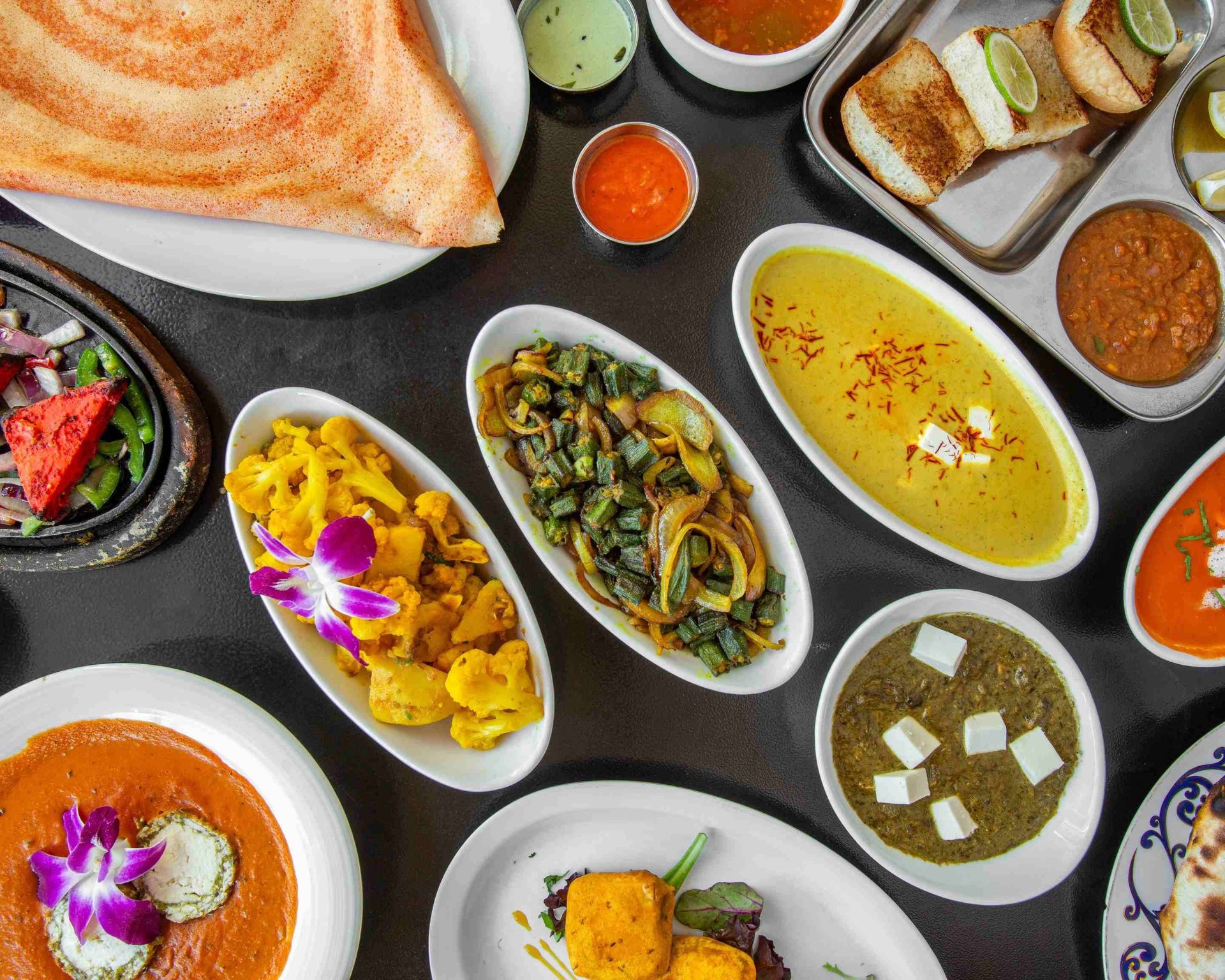
Peppino's Dosa opened at 434 Moody Street with a simple but rare idea: run two completely separate kitchens under one roof. One kitchen is strictly vegetarian, with a dedicated tawa and prep line for dosas, Jain-friendly curries, and vegan thalis. The other handles Punjabi and North Indian meat dishes — Lamb Rogan Josh, Butter Chicken, Goat Korma, the tandoor.
We believe it's the first Indian restaurant in the United States to be built this way from day one. For families with mixed diets — a vegetarian grandparent, a Jain aunt, a gluten-free cousin, a kid who only wants butter chicken — it means everyone actually gets what they came for, cooked properly.
The culture behind the kitchen
Chef Peppino grew up in South India, where the smell of tempering mustard seeds in coconut oil is as familiar as morning coffee. Chef Laddi trained in the North, where a Punjabi wedding meal can run thirty dishes and no one leaves without a second helping of dal makhani. They cook the way they grew up cooking: dals simmered for hours, chutneys ground fresh, dosa batter fermented for eighteen.
Indian hospitality has a name for this — atithi devo bhava, "the guest is god." It's not a slogan. It's why the chai keeps coming, why the sambar refills are free, and why a table of four somehow ends up with enough food for six.
Walking the block today
Moody Street is still a working, living block — not a museum. On any given evening you'll see the Charles Riverwalk lit up at one end, the Embassy Cinema marquee glowing at the other, and a stretch of restaurants in between doing what Moody Street has always done: feeding neighbors, welcoming strangers, and quietly rewriting what "American food" means one plate at a time.
Come find us at 434 Moody Street. Sit down, order a masala dosa, and become part of the next chapter.
Frequently Asked Questions
The Waltham Watch Company opened on the Charles River in 1854 and became the world's first factory to mass-produce watches using interchangeable parts. At its peak it employed thousands and made Waltham a household name in American manufacturing — the nickname 'Watch City' stuck.
Moody Street has been Waltham's main commercial spine since the 1860s, when factory workers needed food, dry goods, and boarding houses close to the mills. It has been a restaurant destination for more than a century — the cuisines just keep changing with each wave of new neighbors.
The first Indian restaurants in Greater Boston opened in Cambridge and Somerville in the 1970s, following the 1965 Immigration and Nationality Act. Waltham's Indian community grew alongside the Route 128 tech corridor in the 1990s and 2000s, and Moody Street became one of the region's most diverse Indian dining strips.
Peppino's Dosa is the first Indian restaurant in the United States to run two fully separate kitchens — one strictly vegetarian, one for meat — under one roof. It brings South Indian dosas, Punjabi curries, and Jain, vegan, and gluten-free cooking to a block that has always defined itself by welcoming new food traditions.
Come Taste It for Yourself
434 Moody Street, Waltham MA. Fresh dosas, thalis, and North Indian curries served every day.
Related Articles
What to Order at Peppino's Dosa: A Guide for a Mixed Table in Waltham
Dosa for one guest, tandoori chicken for another. Find a shared starting point for vegetarian and non-vegetarian Indian dining at 434 Moody Street, Waltham.
Two Kitchens. Two Worlds. One Peppino's: What Makes Us Different From Every Other Indian Restaurant in Waltham
Waltham has a genuinely great Indian restaurant scene. Here's an honest look at how Peppino's Dosa on Moody Street compares — two fully separate kitchens, two distinct dining worlds, North Indian, Punjabi and South Indian cooking, and a table where nobody has to compromise.
The Best Lunch Buffet in Waltham: Fresh Dosas, North & South Indian, Tue–Fri
Waltham's best-value lunch is hiding on Moody Street. Peppino's lunch buffet runs Tuesday through Friday, 11:30 AM to 2:45 PM — fresh dosas cooked to your table, curries, sides, and dessert.